For our production of La Machine des sens, we’ve been thinking about the relationship between performance and public space. What happens when a work unfolds within a site that is already active—socially, artistically, and communally? How do audiences gather within spaces that are not neutral, but shared?
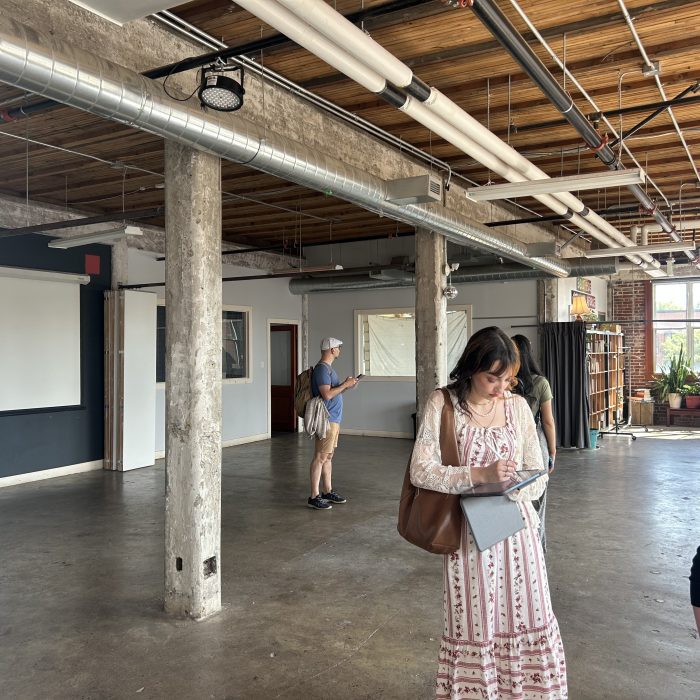
Our in situ approach at Bâtiment 7 is rooted in this question: how to create a temporary community of spectators within an existing community—one that doesn’t displace it, but enters into dialogue with it.
It is within this context that we’re honoured to share that Projets Postmarginal Inc. has been selected as one of two laureates of the 2025–2026 residency call led by La Chapelle Scènes contemporaines and REPAIRE, in partnership with Conseil des arts de Montréal.
AN IN SITU RESIDENCY FOR EMERGENT FORMS
The residency opportunity supports collectives and organizations working across and beyond disciplinary boundaries. Designed as both a research and production platform, it offers the conditions necessary to bring ambitious works to life—across both the stage and in situ environments.
Our in situ residency provides essential material and professional support for the development of the project. This includes an artistic fee, as well as access to orientation and accompaniment services throughout the residency period. It further offers one-year membership to REPAIRE, along with access to one training session from its annual professional development program. Together, these elements provide both financial stability and structured support, allowing the research to unfold with greater continuity and depth
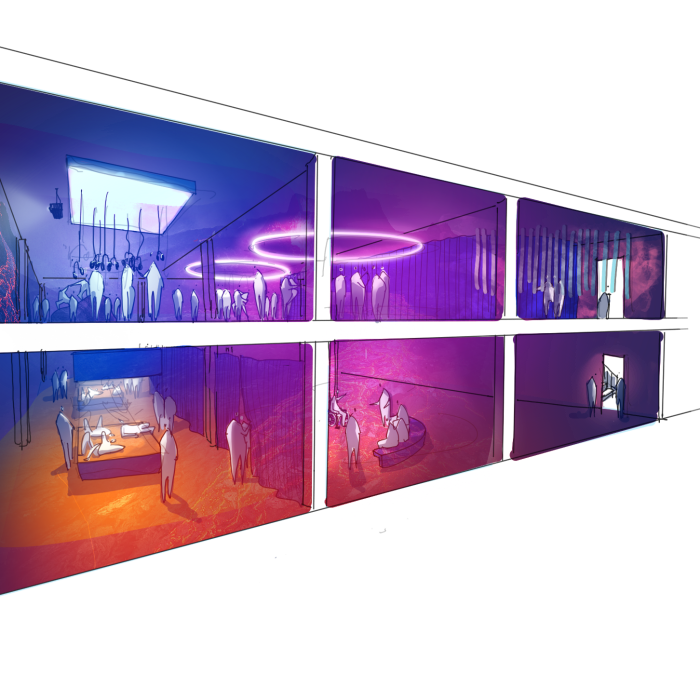
For Postmarginal, this opportunity for funding, structural support from REPAIRE and rehearsal space from the Conseil will support the continued development of La Machine des sens, a 70-minute immersive and ambulatory theatrical experience. Conceived as a multi-sensory journey, the project explores how bodies, environments, and technologies intersect to shape perception and relation.
A SITE ROOTED IN COMMUNITY
The question of where this work unfolds is inseparable from how it takes form.
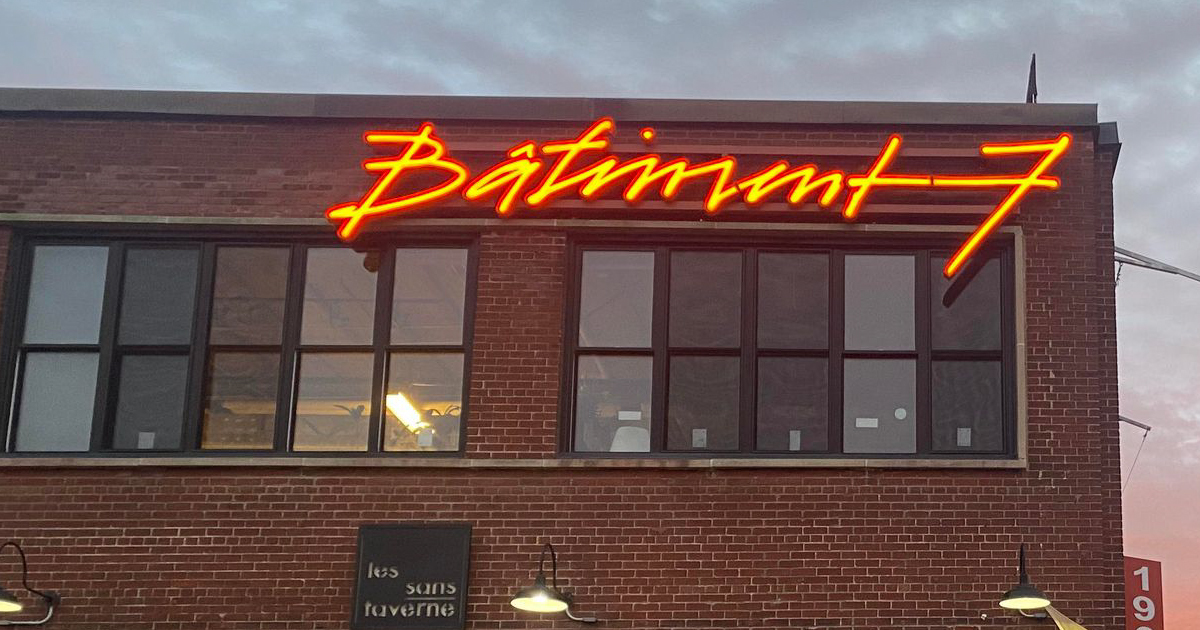
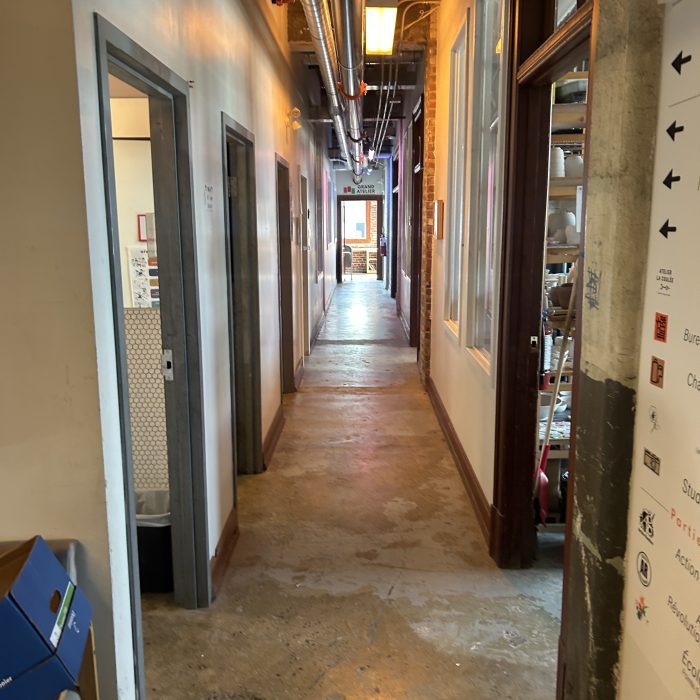
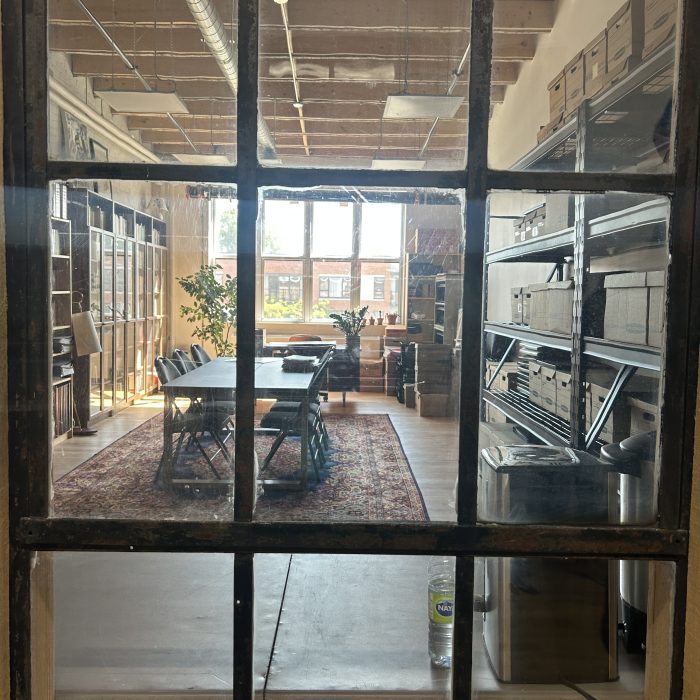
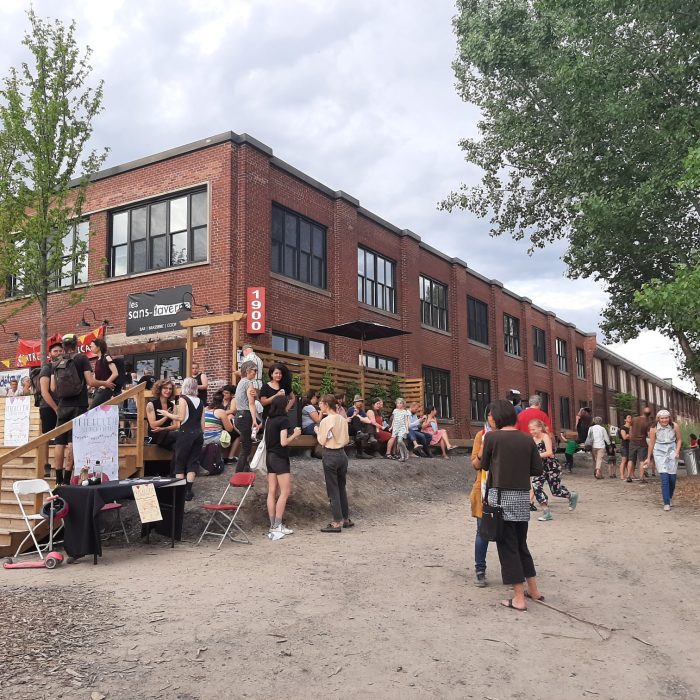
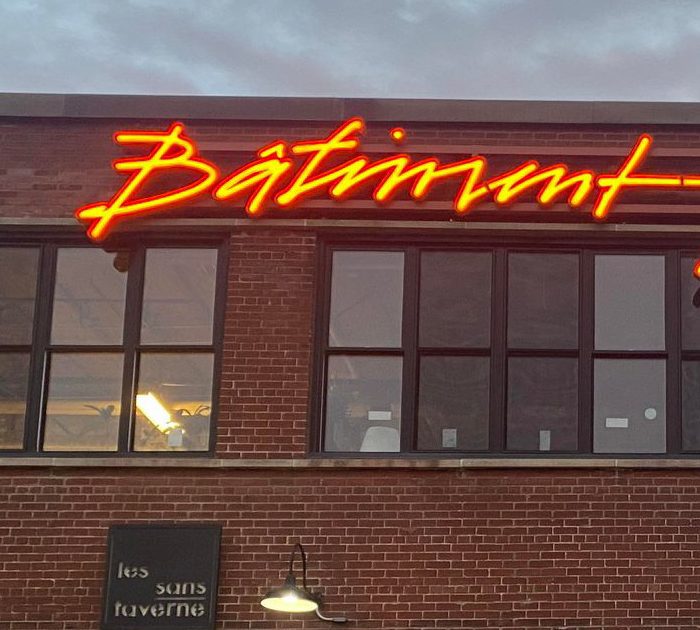
After approaching several warehouse spaces across Montreal, we chose Bâtiment 7 for its deep commitment to the Point-Saint-Charles community and for the alignment of its values with our own. Bringing together under one roof social justice organizations, art and dance schools, and a wide range of sociocultural initiatives, the site operates less as a venue and more as a living ecosystem of collaboration.
Emerging from sustained systemic struggles to establish itself within a historically underserved and multicultural neighbourhood, Bâtiment 7 has developed a horizontal and organic organizational structure grounded in collective decision-making. This ethos resonates directly with our approach to creation—one that privileges relation, process, and shared authorship.
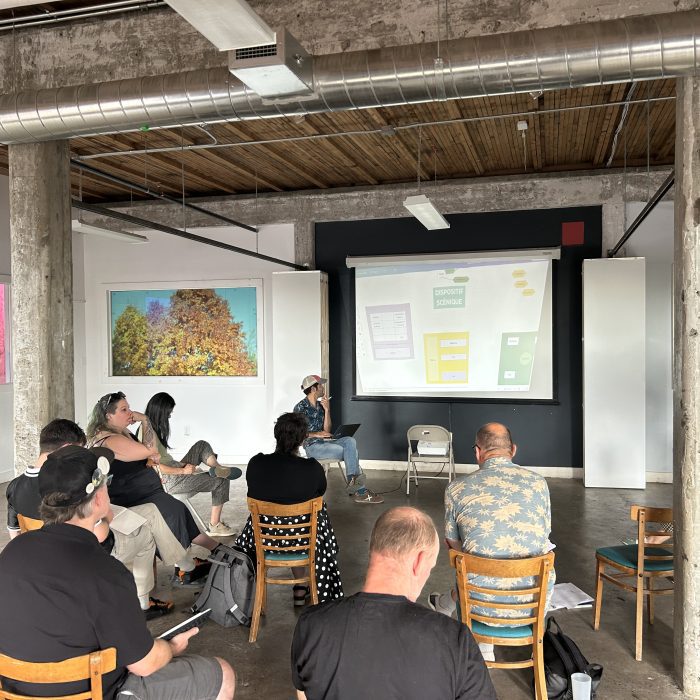
Led by artistic co-producer Crystal Chan, an ongoing dialogue with the different organizations at the site has become central to how the work is taking shape. In this process, the sensory stations of La Machine des sens are being designed not as isolated units, but as interconnected experiences that respond to one another across the building. This has already opened up new forms of exchange with the organizations on site, where artistic work and daily activity begin to intersect.
These encounters are not without challenges, but they are part of what defines in situ work—especially when accessibility is understood as something that is built collectively over time.
SUPPORTING RESEARCH, ENABLING EXPERIENCE AND ACCESSIBILITY
More than a production framework, this residency acts as a critical lever for artistic research—supporting the move from concept toward embodied experience and allowing space for experimentation and forms that resist fixed categories.
It also brings forward a shared responsibility around accessibility. In close dialogue with Bâtiment 7, we are coordinating ongoing discussions on how access is addressed across the entire building, not only within performance areas. This includes engagement with current infrastructure work as an opportunity to rethink circulation and participation at a structural level. These discussions are integral to the project itself, shaping both its spatial conditions and its artistic development.
As La Machine des sens continues to evolve, this residency marks an important step in its trajectory: from research to realization, from exploration to encounter.
The Partners
The project has been made possible by Conseil des arts de Montréal, the Canada Council and the Conseil des arts et des lettres du Québec. Associated research partners include Research Centre for Human Potential (HUPR), What connects us (McGill-Concordia), Eastern Bloc, and Théâtre Déchaînés.